Test evolving concepts
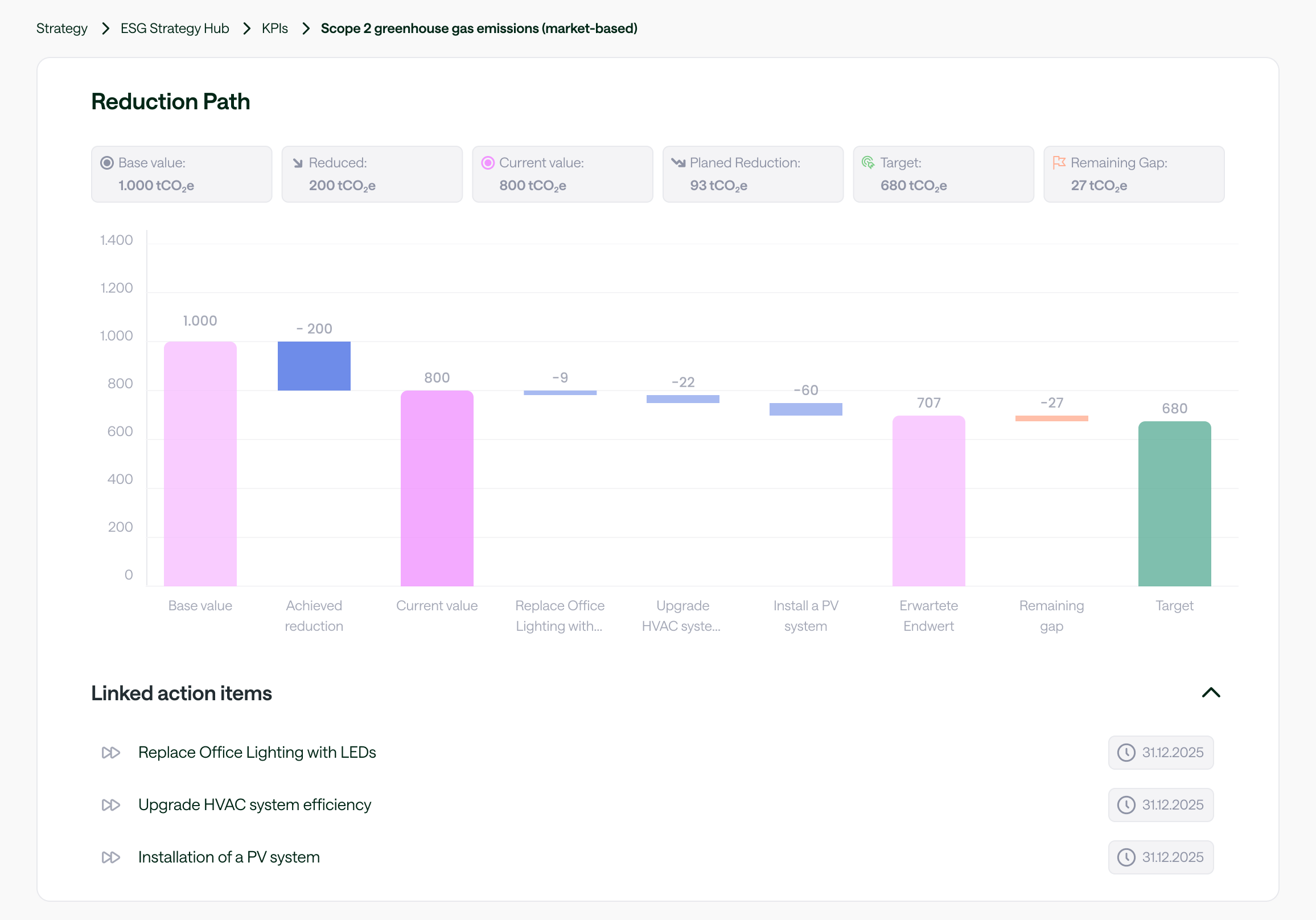
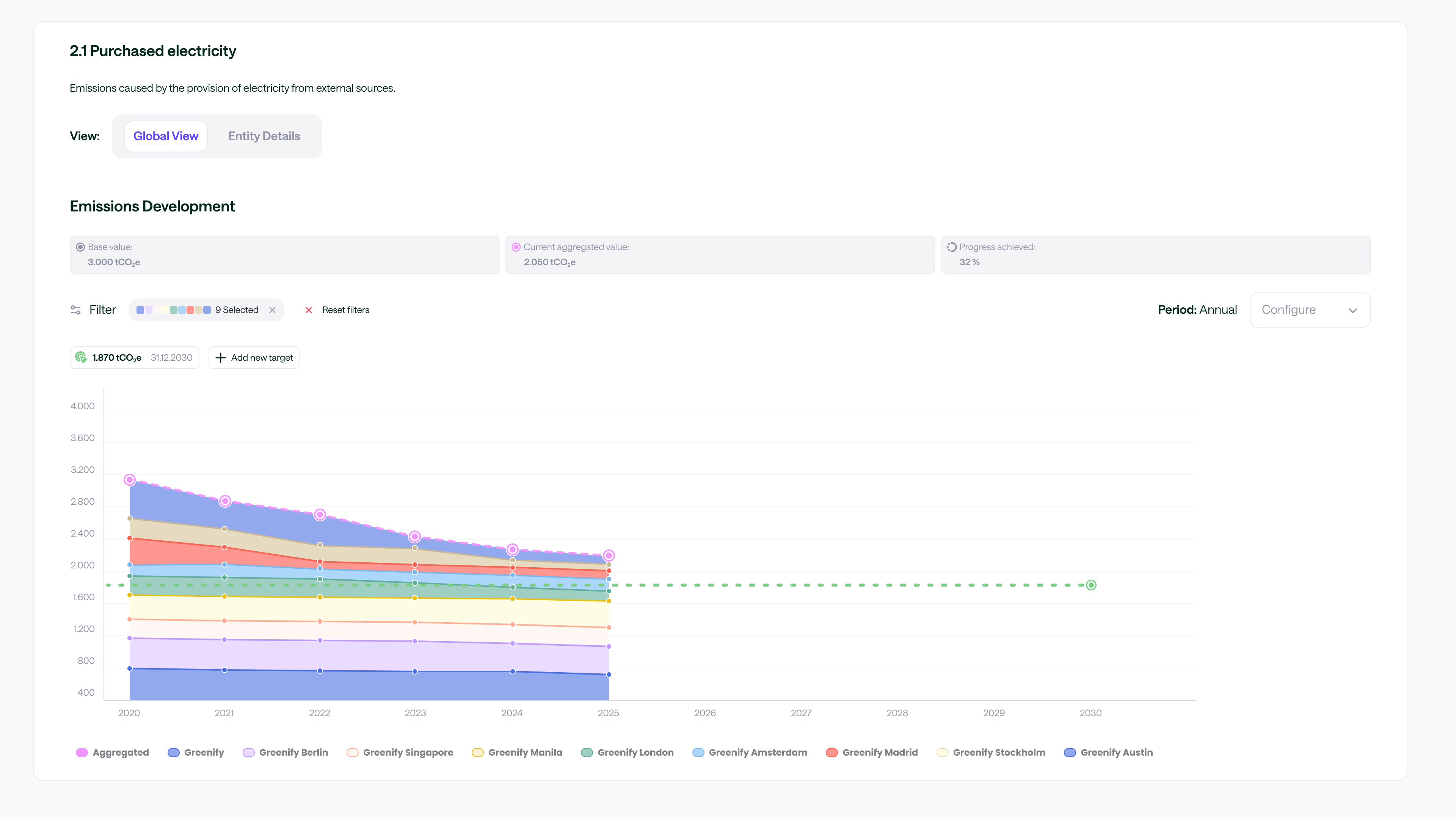
We tested evolving concepts with customers to understand whether the structure and relationships within the Strategy Hub were clear.
At Planted, I worked on Impact OS, a B2B SaaS platform helping companies manage emissions and sustainability initiatives.
One of my main projects was the ESG Strategy Hub: a new product area designed to help sustainability teams move from high-level ambition to structured, measurable action.
Sustainability strategies were often fragmented across documents, spreadsheets and different tools.
Companies needed a clearer way to understand what they wanted to achieve, what they were doing about it, and whether they were making progress.
Through customer interviews, surveys and feedback collected in Product-led webinars, three needs came up consistently:
The challenge was to bring all three together without creating another complex reporting tool.
We translated those needs into three connected building blocks:
Goals defined the direction, Actions captured what teams were doing, and KPIs made progress measurable.
This became the core mental model behind the Strategy Hub.
Discovery board defining the foundation for ESG strategy management.
Different companies manage ESG in very different ways.
The system had to support varying levels of detail, ownership and complexity while keeping the basic experience easy to understand.
I explored different structures and interaction models, working closely with Product and Engineering to balance flexibility with a clear, scalable foundation.
We tested evolving concepts with customers and used their feedback to refine the structure, terminology and level of information shown throughout the experience.
We tested evolving concepts with customers to understand whether the structure and relationships within the Strategy Hub were clear.
Feedback helped us adjust how the different parts of the experience were organised and connected.
We refined terminology and the amount of information shown at each step to make the system easier to understand and navigate.
The experience was simplified where possible while preserving the flexibility needed by more mature sustainability teams.
The final experience gave customers one place to define goals, connect actions and track progress through KPIs.
Rather than treating ESG strategy as a static document, the Strategy Hub turned it into an ongoing product workflow.
The project expanded Impact OS beyond measuring sustainability data.
It introduced a structured way for companies to plan, manage and follow their ESG strategy over time, while creating a foundation for more complex use cases.
There's more behind the decisions, trade-offs and iterations shown here.